Since adding click restorer for gclid, we are seeing a significant number of urls ending: ?gclid=%7Bgclid%7D in GA, which decodes to ?gclid={gclid}
These only relate to Safari browsers and presumably only relate to users who do no accept cookies. As they only appear when modelled data is enabled and do not show when selecting observed data in GA4.
Can anyone tell me if this is expected behaviour or signs of a configuration issue?
The ? character before the query parameters is standard and expected behaviour, and is part of the HTTP/URI protocol standard.
It serves as a separator between the base path of the page and the query parameters. After the address and the forward slash /, ? must always be placed before the list of query parameters begins.
for example: https://example.com/?gclid=.....
These unresolved gclid parameters started to appear for users with consent denied at the same time as the cookie keeper was enabled. This seems quite a coincidence.
Are you able to confirm if this is caused by cookie keeper or not? And if they are, is this likely to be affecting attribution?
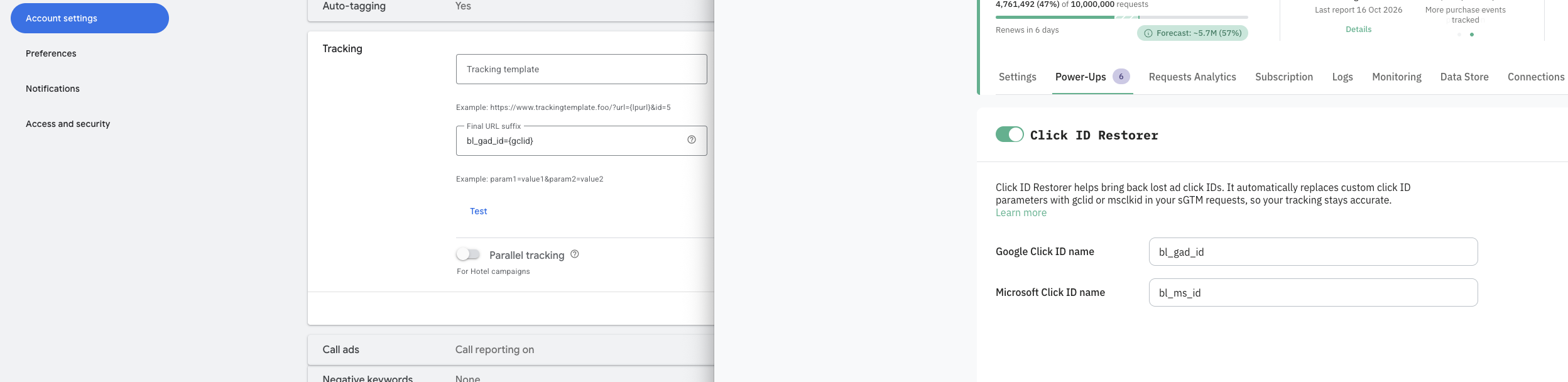
Please ensure that all settings have been configured in accordance with the guide:
as our checks did not reveal any issues.
The ‘power up’ function itself only acts when the URL contains no gclid or msclkid. It then copies the value of your custom backup parameter into gclid.
Safari’s Private mode strips the actual gclid, so the restorer relies solely on the backup parameter.
Please ensure that your custom backup name mybackup={gclid} is entered correctly and matches the ‘Final URL suffix’ in Google Ads and the ‘Click ID Restorer’ field in Stape.
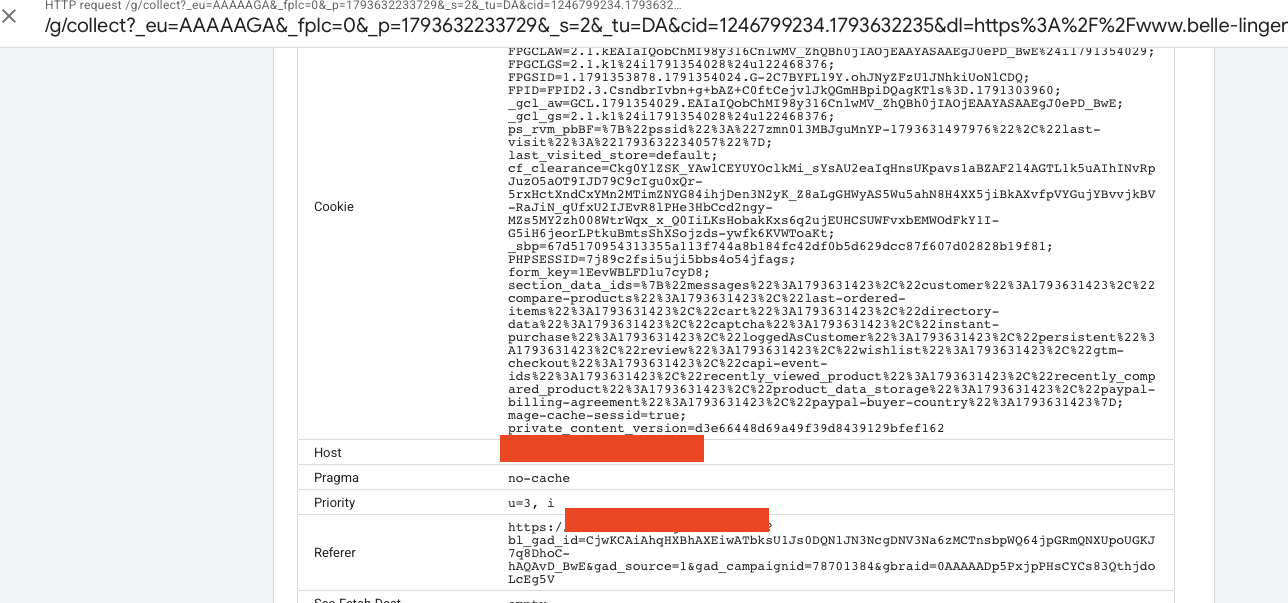
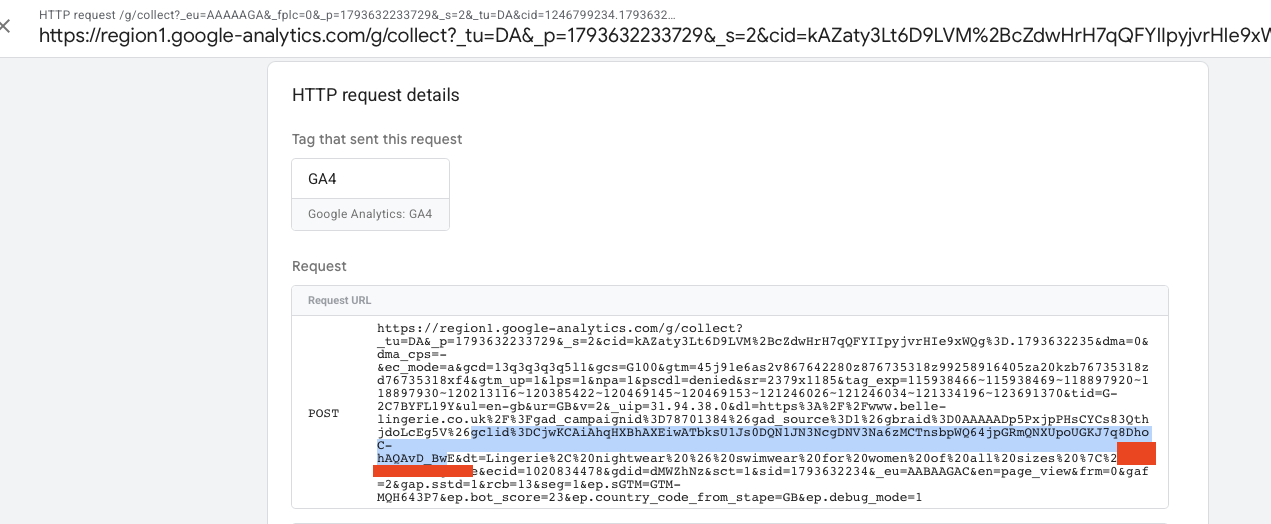
Please also share your settings and test results with us in whatever format is convenient for you (videos, screenshots); we may be able to identify the problem.
I have found out that the site receives Google Ads traffic from 2 accounts, one is linked to GA4 and uses auto tagging , this one has the back up gclid parameter as a final URL.
The other is not linked and does not have the back up parameter in the final URL. Could this second one be the cause ?